

NFT Marketplaces for Traders: A Beginner's Guide to Understanding Why They're Different
NFT marketplaces operate differently from the crypto and forex markets you may be learning to trade. This guide explains those differences in plain language, so you can make informed decisions about whether NFTs fit your trading strategy.
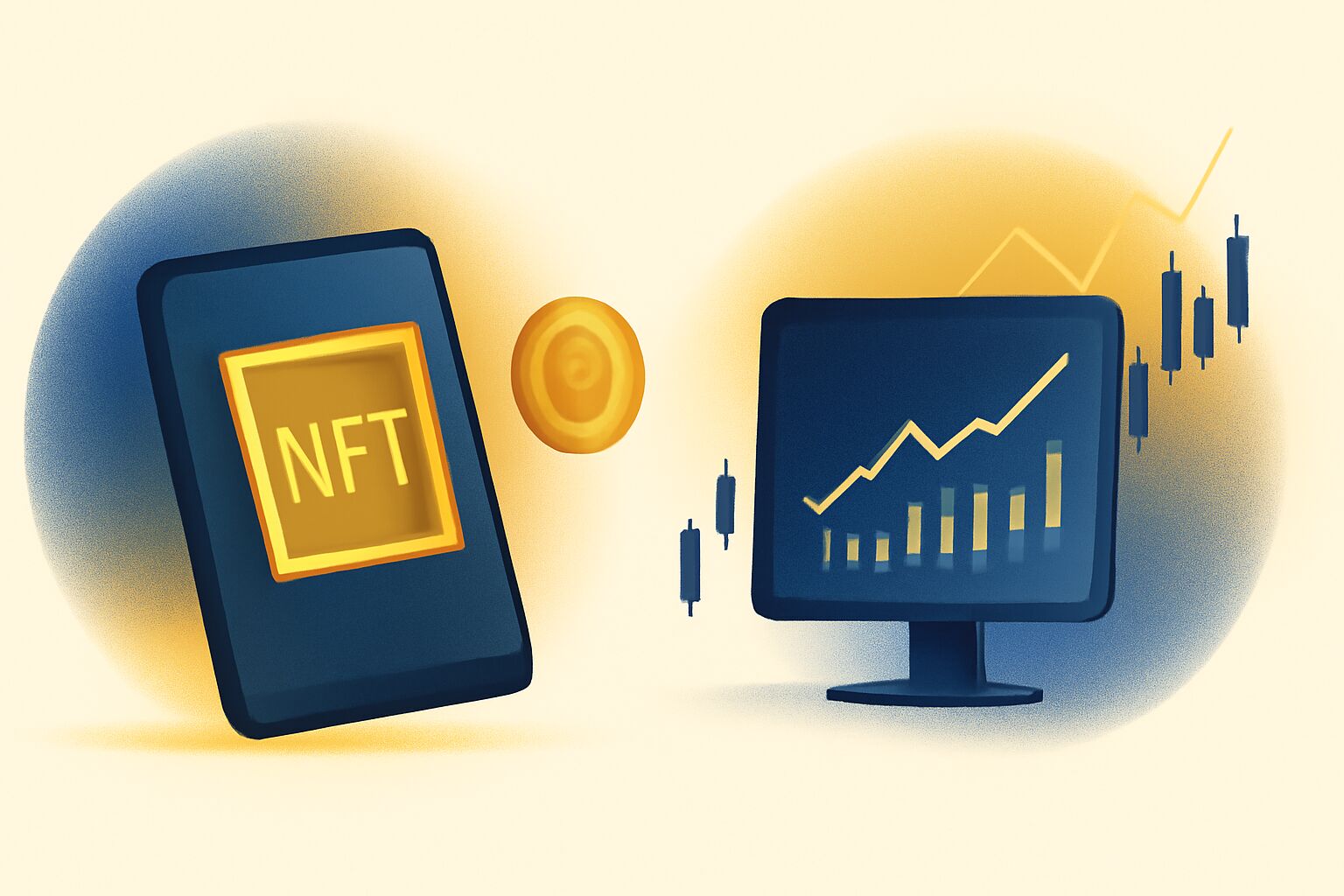
What Makes NFT Markets Different from Crypto Trading
When you trade Bitcoin or a forex pair, you're buying and selling standardized assets. Thousands of traders are doing the same thing at the same time, which creates deep liquidity—lots of buyers and sellers ready to trade instantly.
NFT markets work differently. Each NFT is unique, which means each one is like a one-of-a-kind item rather than a standardized contract. When you want to sell an NFT you bought, you're waiting for someone interested in that specific piece. This can take days or weeks. Your money is tied up during that time, and the broader market may have moved.
In contrast, if you trade Bitcoin on an exchange, you can buy and sell in seconds. This speed matters when you're learning to execute trading strategies.
Price Movements Are Driven by Different Factors
Crypto markets and forex pairs move based on measurable data: economic reports, trading volume, and market structure. Because these markets are standardized and liquid, traders can use technical tools (like moving averages and support/resistance levels) to study price patterns.
NFT floor prices move based on different factors: community interest, project announcements, and social media attention. These factors are harder to measure and predict using the same tools that work for liquid markets.
This doesn't make NFTs bad investments for collectors. It means they operate on different mechanics. As you're building your trading skills, focusing on markets with clearer, measurable price drivers will help you develop a solid foundation.
How On-Chain NFT Data Can Inform Your Crypto Trading
Even if you don't trade individual NFTs, on-chain NFT activity can give you useful context for your crypto trades.
When many NFTs are being bought and sold on a blockchain (like Ethereum or Solana), it signals strong user activity on that chain. High marketplace volume can indicate growing interest in that ecosystem. Traders sometimes use this as one data point—alongside other signals—to inform their directional bias on the underlying blockchain's token.
This is different from trading individual NFT prices. Instead, you're using aggregate on-chain activity as macro context for broader market trends.
Understanding Royalties: Economics Beyond Price
If you encounter NFT projects during your research, royalties are worth understanding. When an NFT is resold, the creator receives a percentage of that sale (often 5–10%). This ongoing revenue stream means creators have an incentive to build their communities and keep driving activity.
This is similar to understanding how a business model works—it's useful context for evaluating which projects have staying power. But it's separate from trading the price movement itself.
A Practical Framework for Beginners
As you start your trading education, use this framework:
Trade markets designed for trading. Crypto spot and futures, forex pairs, and other liquid markets have the infrastructure and mechanics that technical analysis is built for.
Use NFT data as research context. If you're researching a blockchain's ecosystem health, on-chain NFT volume is one useful metric among many.
Collect what interests you. If you genuinely like an NFT project or artist, buy it as a collector—not as a trading position. Set expectations accordingly.
This approach keeps your trading capital focused where your technical skills will have the most impact.